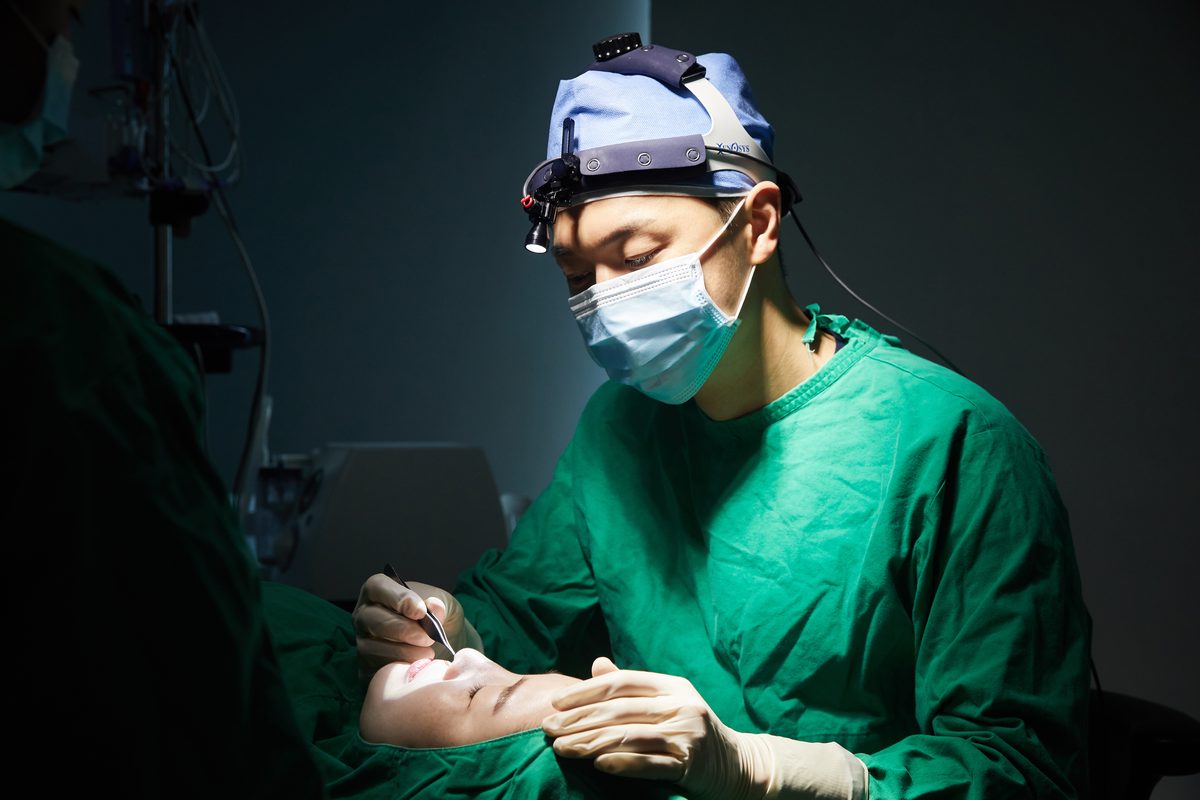


Ptosis Correction main visual
Ptosis CorrectionPtosis Correction

Ptosis Correction

Sleepy, heavy-looking eyes —
eye-opening strength corrected together

Beautiful eyes hinge on the right eyelid crease height and iris exposure ratio.
Appropriate Ptosis Correction strengthens eye-opening power and increases iris exposure
for sharply defined eyes.

Strengthened Eye-Opening Ptosis Correction Defined Eye Shape Incisional · Non-incisional · Monolid 1:1 Personalized

Surgery Information

Surgery Information

Surgery details may vary by individual,
and side effects such as inflammation, bleeding, and nerve damage may occur and should be carefully considered.

Surgery Duration

Approx. 1 hour

Suture Removal

Not required

Anesthesia

Local / IV sedation

Follow-up Visits

Not required

Core Principles

Controlling the levator muscle
for a defined, striking eye shape

Ptosis Correction strengthens eye-opening power by controlling the levator muscle — a core procedure for revision surgery, severe ptosis, and creating high, dramatic double eyelid creases.
Combining it with double eyelid surgery delivers even brighter, more defined results.

POINT 01

Ptosis Correction position adjustment
tailored to each individual's eye shape

The inner and outer boundaries above the iris relative to the pupil are corrected. The position may vary depending on individual eye shape.

POINT 02

Corrects both pseudo- and
true ptosis

Regardless of pseudo or true ptosis, Ptosis Correction with appropriate correction strength is needed to improve eye shape. Iris exposure is adjusted to suit each individual.

POINT 03

Minimal tissue trauma and swelling
for faster recovery

Without excessive removal of skin or tissue, and with a shorter surgery time, swelling is minimal and return to daily life is rapid.

Comparison

Ptosis Correction 2 Methods — At a Glance

The most suitable method varies by eyelid thickness, tissue volume, severity of ptosis, and whether double eyelid creases are present.

Incisional Ptosis Correction

Ideal for thick eyelids
and severe ptosis

  • Removes unnecessary fat, muscle, and skin through incision and strengthens the levator muscle
  • Suitable for thick eyelids or moderate-to-severe ptosis
  • Recovery approx. 1 week (minimal scar similar to double eyelid scar)
Non-incisional Ptosis Correction

Ideal for thin eyelids
and mild ptosis

  • Corrects levator function through small punctures without incision
  • Suitable for thin eyelids with minimal fat/muscle and mild ptosis
  • Recovery 2–3 days (minimal scarring and swelling for quick return)

Type Details

Ptosis Correction by Method
Ideal Cases & Surgical Process

Select a tab below to view the ideal cases
and step-by-step surgical process for each method.

Incisional Ptosis Correction

Minimal incision to
remove unnecessary fat, muscle & skin

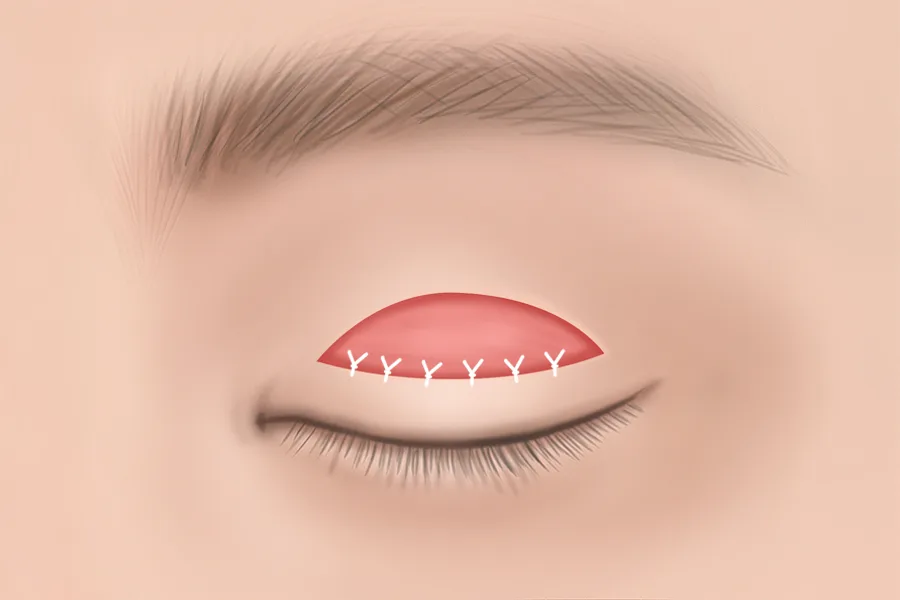
A minimal skin incision removes unnecessary fat and skin, then the tarsus and orbicularis muscle are corrected to strengthen the eye-opening muscle. Combining with double eyelid surgery creates even brighter, more defined results.

Effective Cases

When Incisional Ptosis Correction Is Effective

CASE 01

Thick eyelids or large tissue volume

CASE 02

Moderate-to-severe or congenital ptosis

CASE 03

Desire for a high, dramatic double eyelid crease

CASE 04

Severe adhesion requiring revision surgery

CASE 05

Using brow muscles to open the eyes

CASE 06

Weak eye-opening strength

Surgery Process

Incisional Ptosis Correction Process

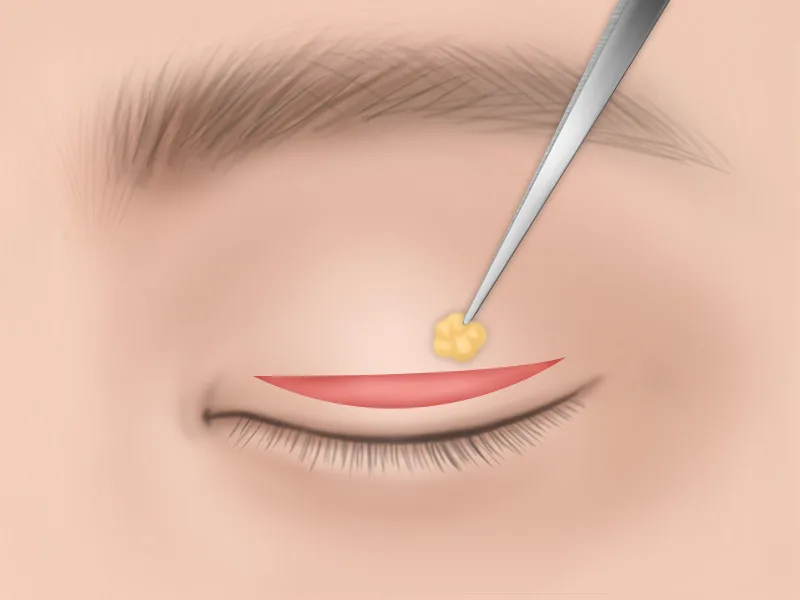
The individual's eye and tissue condition is closely examined to correct the necessary amount of drooping skin and fat.
Removing only the appropriate tissue volume minimizes an artificial appearance and scarring.

STEP 01

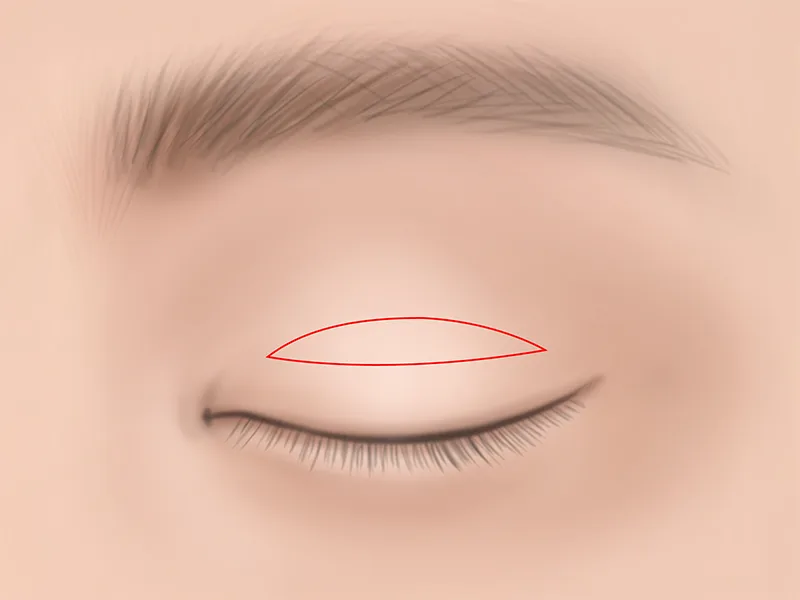
Pre-operative Design

Before surgery, the individual eye shape, skin thickness, and fat distribution are thoroughly assessed.

STEP 02

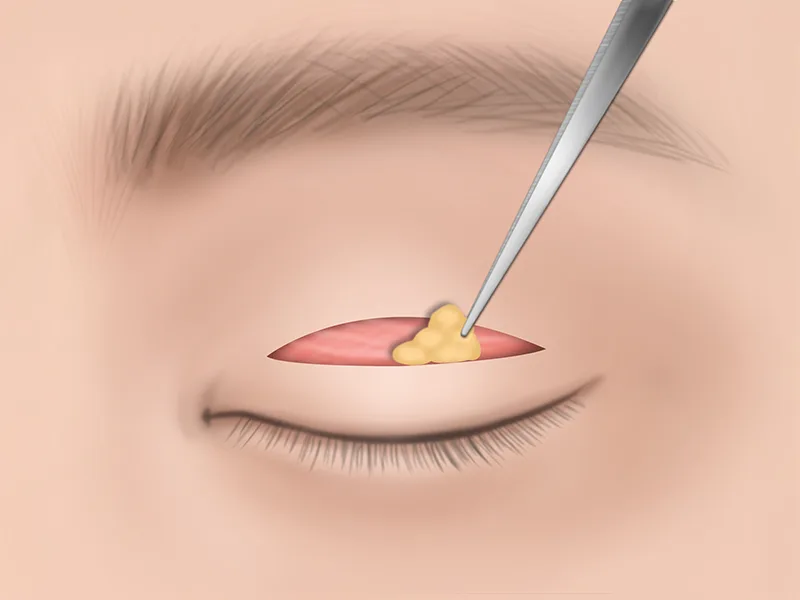
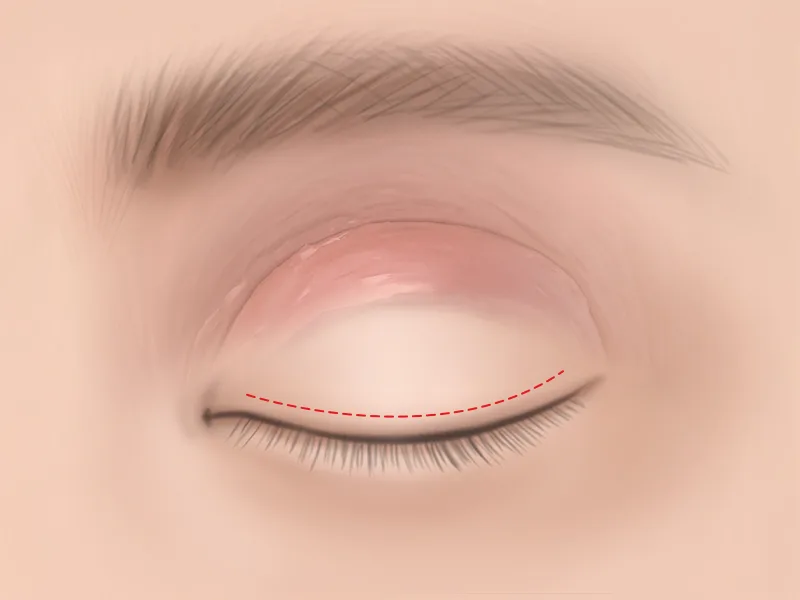
Muscle and fat removal after incision

After incision, the appropriate amount of muscle and fat is removed according to individual condition.

STEP 03

Suturing the levator muscle
at the correct position

Using special sutures, knots are placed in the levator muscle to strengthen eyelid lifting power.

STEP 04

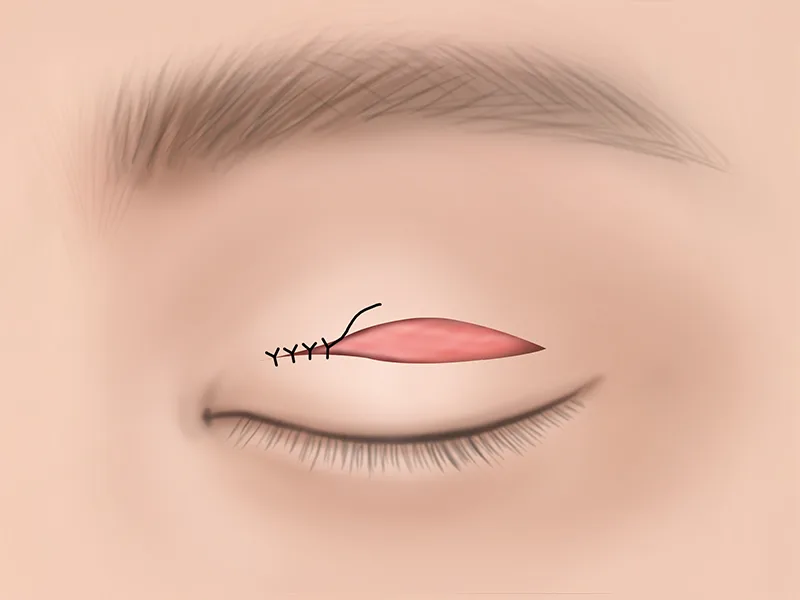
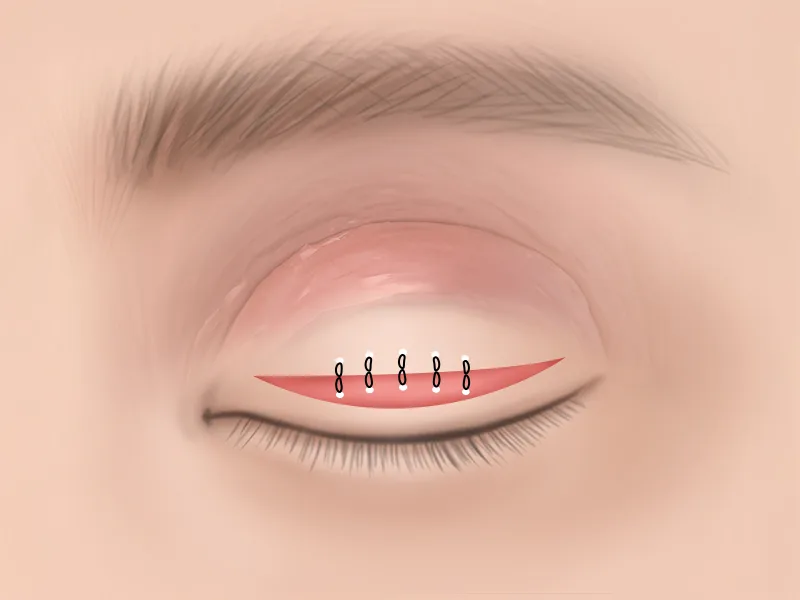
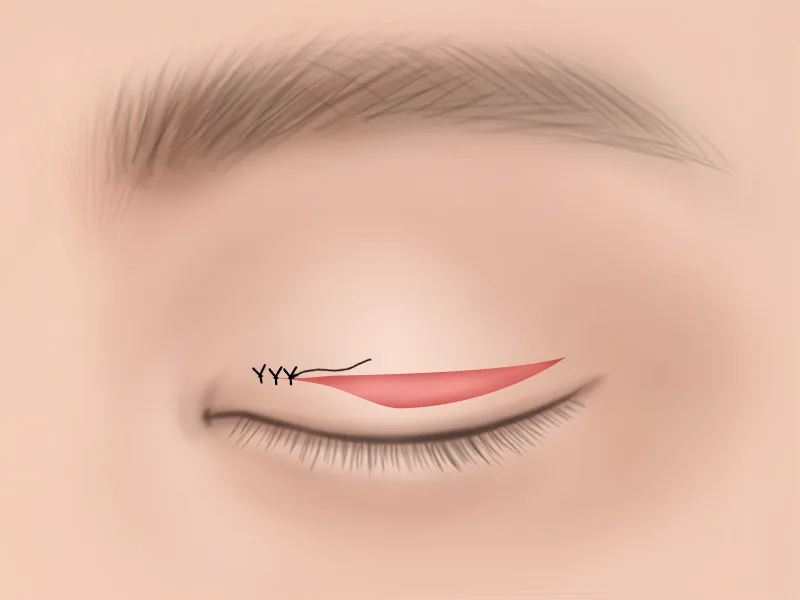
Meticulous suturing

The incision is carefully and precisely sutured so no scar remains even when the eyes are closed.

Non-incisional Ptosis Correction

Firmly secured with fine sutures —
reduced risk of loosening for sharp eyes

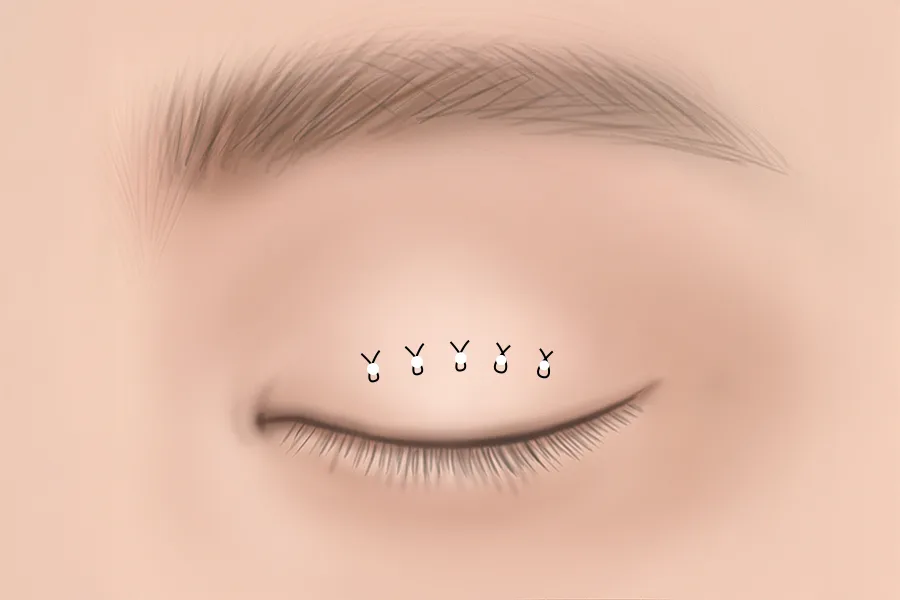
Fine sutures are densely placed to firmly fix the muscle. Although non-incisional, this technique reduces the risk of loosening comparable to incisional correction — with minimal scarring and swelling for a quick return to daily life.

Effective Cases

When Non-incisional Ptosis Correction Is Effective

CASE 01

Weak eyelid strength causing the iris to be covered by the eyelid

CASE 02

Ptosis giving a sleepy or tired appearance

CASE 03

Thin skin with minimal tissue

CASE 04

Using forehead muscles to open the eyes

CASE 05

Ptosis present but with minimal eyelid drooping

CASE 06

Eyelid has elasticity but iris is still covered

Surgery Process

Non-incisional Ptosis Correction Process

Dense suturing with fine threads and firm muscle fixation means that despite being non-incisional,
the risk of loosening is minimized and results are as sharply defined as incisional correction.

STEP 01

Pre-operative Assessment

Before surgery, the individual eye shape, skin thickness, and fat distribution are thoroughly assessed.

STEP 02

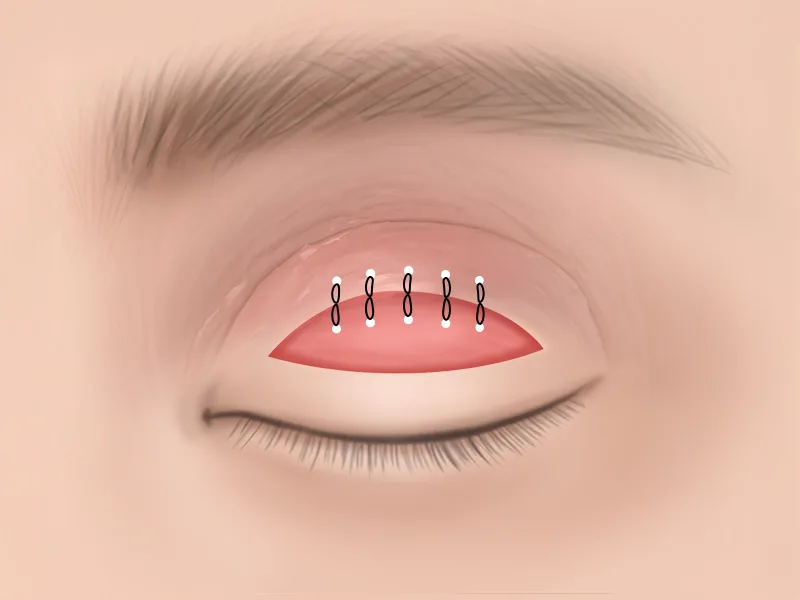
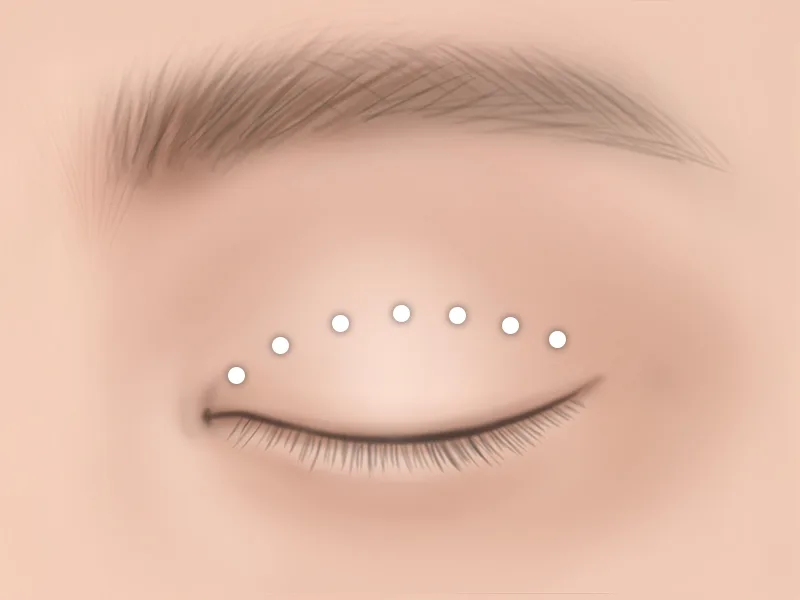
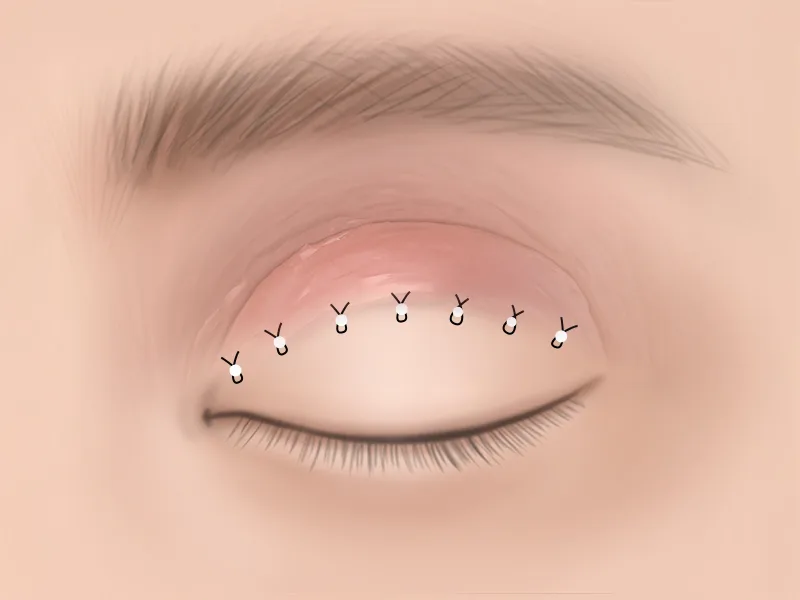
7 micro-punctures
according to design

Seven tiny punctures are made and sutures passed through to fix the double eyelid crease.

STEP 03

Suturing the levator muscle
at the correct position

Using special sutures, knots are placed in the levator muscle to strengthen eyelid lifting power.

STEP 04

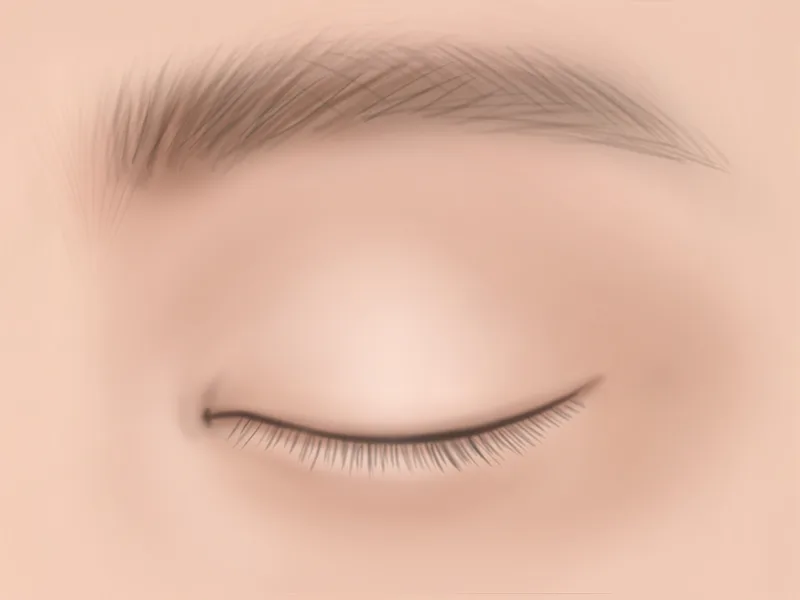
Defined eye shape achieved

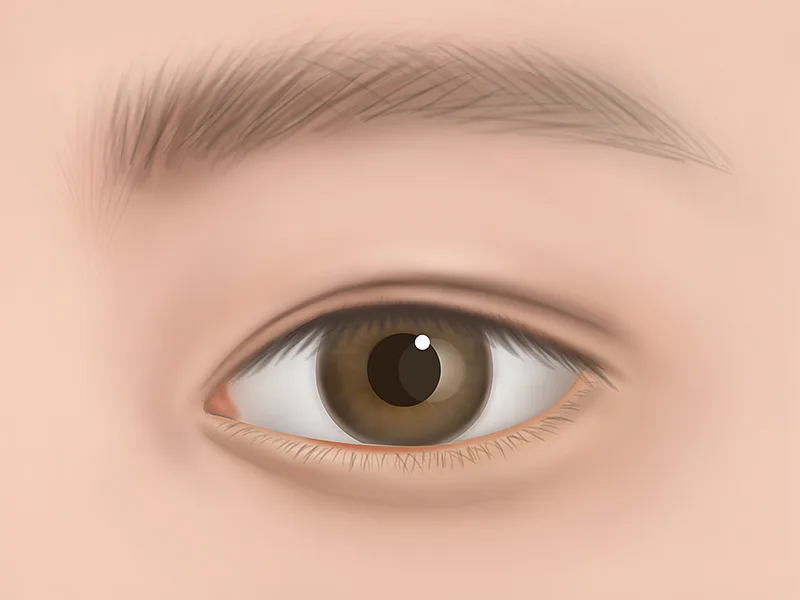
The previously sleepy impression caused by covered irises transforms into a naturally lifted eyelid with a sharply defined eye shape.

Monolid Ptosis Correction

Bright, defined eyes
without a double eyelid crease

Performed for those who prefer a natural, understated look over dramatic transformation while maintaining their current impression. We fulfill individual goals by creating refreshing, clear-cut eyes without a visible double eyelid crease.

Effective Cases

When Monolid Ptosis Correction Is Effective

CASE 01

Weak eyelid strength causing the iris to be covered by the eyelid

CASE 02

Ptosis giving a sleepy or tired appearance

CASE 03

Desire to maintain current natural appearance

CASE 04

Desire for larger eyes without a double eyelid crease

Surgery Process

Monolid Ptosis Correction Process

Performed when a natural, understated look is preferred over drama while maintaining current appearance.
Goals are fulfilled by creating refreshing, clear-cut eyes without a visible double eyelid crease.

STEP 01

Pre-operative Design

Before surgery, the individual eye shape, skin thickness, and fat distribution are thoroughly assessed.

STEP 02

Incision above lashes,
muscle and fat removal

For thick skin with excess fat, the appropriate amount of muscle and fat is removed after incision.

STEP 03

Internal knotting
to prevent visible crease

Knots are placed internally in the levator muscle to strengthen eyelid lifting power without creating a visible crease.

STEP 04

Meticulous suturing

The incision is carefully and precisely sutured so no scar remains even when the eyes are closed.

Before & After

Ptosis Correction Before & After

Actual Ptosis Correction before & after cases
performed at Pleasure Plastic Surgery.

Case 01 Natural Adhesion + Ptosis Correction
BEFORE
AFTER
Case 02 Natural Adhesion + Ptosis Correction
BEFORE
AFTER
Case 03 Incisional Ptosis Correction
BEFORE
AFTER
Case 04 Ptosis Correction Incisional Revision
BEFORE
AFTER

Pleasure Difference

Beyond simple line correction —
designing the entire impression

The eyes are the center of the face's impression. We operate not on a single crease,
but considering the full facial balance and tissue resilience.

POINT 01

1:1 personalized eye surgery
that preserves overall facial balance

Before surgery, we precisely analyze brow-to-eye distance, eye length, skin thickness, fat volume, eyelid drooping, eye-opening strength, and brow position — then design a refined 1:1 personalized procedure.

POINT 02

Minimal tissue damage for
reduced scarring and swelling

By using minimally invasive micro-incision techniques, scarring is nearly invisible; personalized post-operative care enables a swift return to daily life.

After Care

Post-operative care system
for a better quality of life

Our systematic post-care program manages bruising, swelling, and scarring
for faster recovery.

SmartLux
Bruising & swelling management · Pain relief

Medical-grade LED therapy accelerates wound healing and reduces swelling and bruising after surgery.

Anti-Swelling Injection
Reduces swelling · Aids wound recovery

Removes swelling at the wound site and promotes blood circulation for effective reduction of swelling and bruising.

Scar-Reduction Injection
Wound recovery · Scar tissue treatment

Gently softens post-surgical scar tissue and reduces swelling to restore skin to its natural condition.

Why PLEASURE

Unrivaled expertise built on experience —
Why Choose Pleasure

From 1:1 personalized consultation and surgery to every step of recovery — through our dedicated Doctors system,
We do our utmost to create a distinctive beauty.

PLEASURE POINT 01

reflecting your personal taste,
Custom Design

We analyze each person's unique preferences and facial structure from multiple angles to naturally enhance their most flattering appearance.

PLEASURE POINT 02

university-hospital-grade
equipped with safe surgical facilities

With an advanced sterile operating room, uninterruptible power supply, dantrolene, defibrillator, and more, we maintain complete readiness for any possible emergency at all times.

PLEASURE POINT 03

systematic
after-care system

Because post-operative care can significantly affect outcomes, our personalized aftercare program helps each patient return to daily life as quickly as possible.

FAQ

Before Ptosis Correction —
Frequently Asked Questions

Q How do I decide between incisional, non-incisional, and monolid Ptosis Correction?
The decision is based on eyelid thickness, fat and muscle volume, degree of ptosis, and whether a double eyelid crease is desired. Incisional is suitable for thick eyelids with severe ptosis; non-incisional for thin eyelids with mild ptosis; monolid for those who want defined eyes without a visible crease. We will guide you to the best method through a thorough in-clinic examination.
Q Can Ptosis Correction be combined with double eyelid surgery?
Yes, incisional and non-incisional Ptosis Correction are frequently combined with double eyelid surgery. In fact, combining them creates an even brighter, more defined result, making simultaneous surgery highly effective. Monolid Ptosis Correction is performed without a double eyelid crease.
Q How long is the recovery period?
Recovery varies by method. With incisional Ptosis Correction, major swelling subsides in about a week; non-incisional has minimal scarring and swelling, allowing return to daily life in 2–3 days; monolid Ptosis Correction uses micro-incisions for relatively fast recovery. Post-care such as SmartLux and anti-swelling injections can further accelerate recovery.
Q Could Ptosis Correction result in asymmetrical eyes?
The core of Ptosis Correction is precisely measuring left-right eye-opening strength and tarsal position to achieve symmetry. Even if minor natural asymmetry exists, different correction strengths are applied to each side during surgery. However, as swelling subsides at different rates, eyes may temporarily appear asymmetrical — this resolves naturally over time.
Q Does monolid Ptosis Correction really prevent a double eyelid crease from forming?
Monolid Ptosis Correction places internal knots in the levator muscle so no crease appears on the surface — so fundamentally, a double eyelid crease does not form. However, depending on individual eyelid thickness and tissue condition, a subtle line may appear; this is discussed thoroughly in the pre-operative design consultation.
Q I need Eye Revision Surgery — is incisional Ptosis Correction still an option?
When severe adhesion requires revision surgery, incisional Ptosis Correction is one of the most effective options. A surgical plan is developed after comprehensively assessing existing scarring, degree of adhesion, and remaining tissue — detailed feasibility will be confirmed through an in-clinic consultation.

Consultation

Transform that sleepy impression —
the beginning of sharply defined eyes

The most suitable Ptosis Correction method varies by eyelid thickness, degree of ptosis, and desired outcome.
We will design the best approach for you through an in-clinic consultation.

HoursMon–Fri 10:00–19:00 · Sat 10:00–17:00 · Closed Sun & Holidays

Before & After

Ptosis Correction Before & After

Actual results from our patients — Ptosis Correction before & after. Only cases with patient consent are published.

BEFORE AFTER

PLEASURE DUAL SYSTEM

To surgical precision, we add the insight of skin science.

Pleasure's dual system where surgical structural improvement and dermatological texture restoration work together. Designed with only what is needed, in the most harmonious order.